
From plastic resin to real products: the role of Thai film converters under Europe’s new packaging law
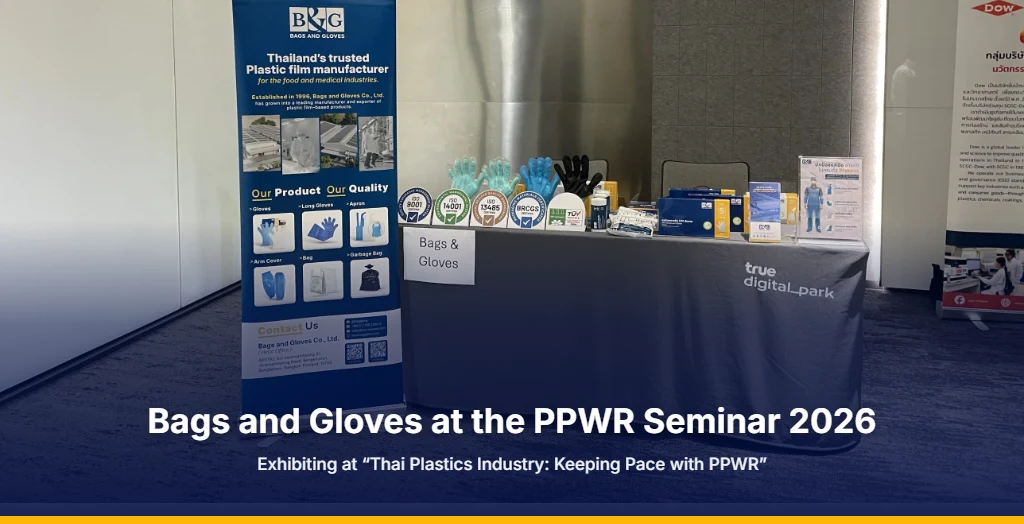
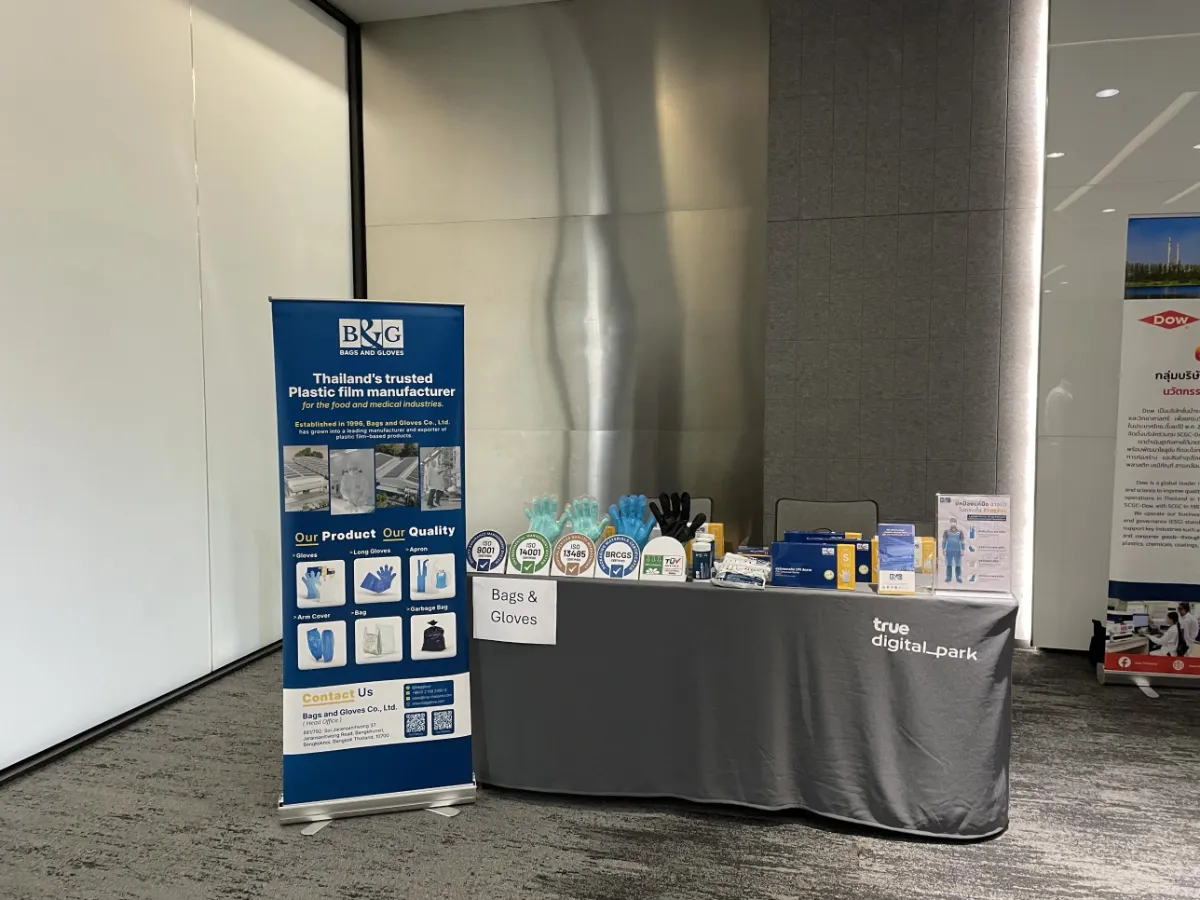
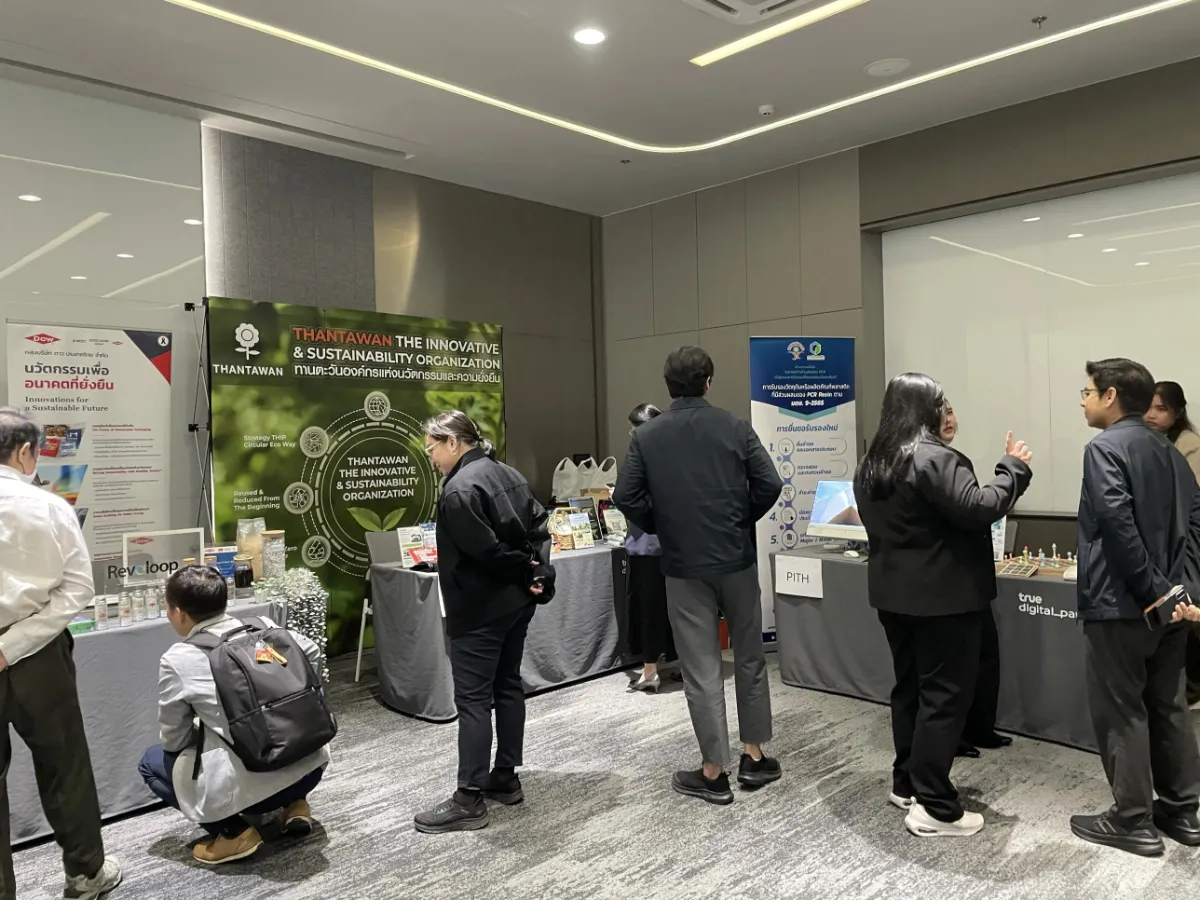
On Tuesday, 24 November 2026, Bags and Gloves Co., Ltd. was one of eight organisations exhibiting at the seminar “Thai Plastics Industry: Keeping Pace with PPWR” (Navigating EU Packaging & Packaging Waste Regulation). The Petrochemical Industry Club and the Plastics Industry Club of the Federation of Thai Industries (FTI) organised the event with the National Metal and Materials Technology Center (MTEC), NSTDA. It took place in Classroom 1–3 at True Digital Park West, Bangkok.
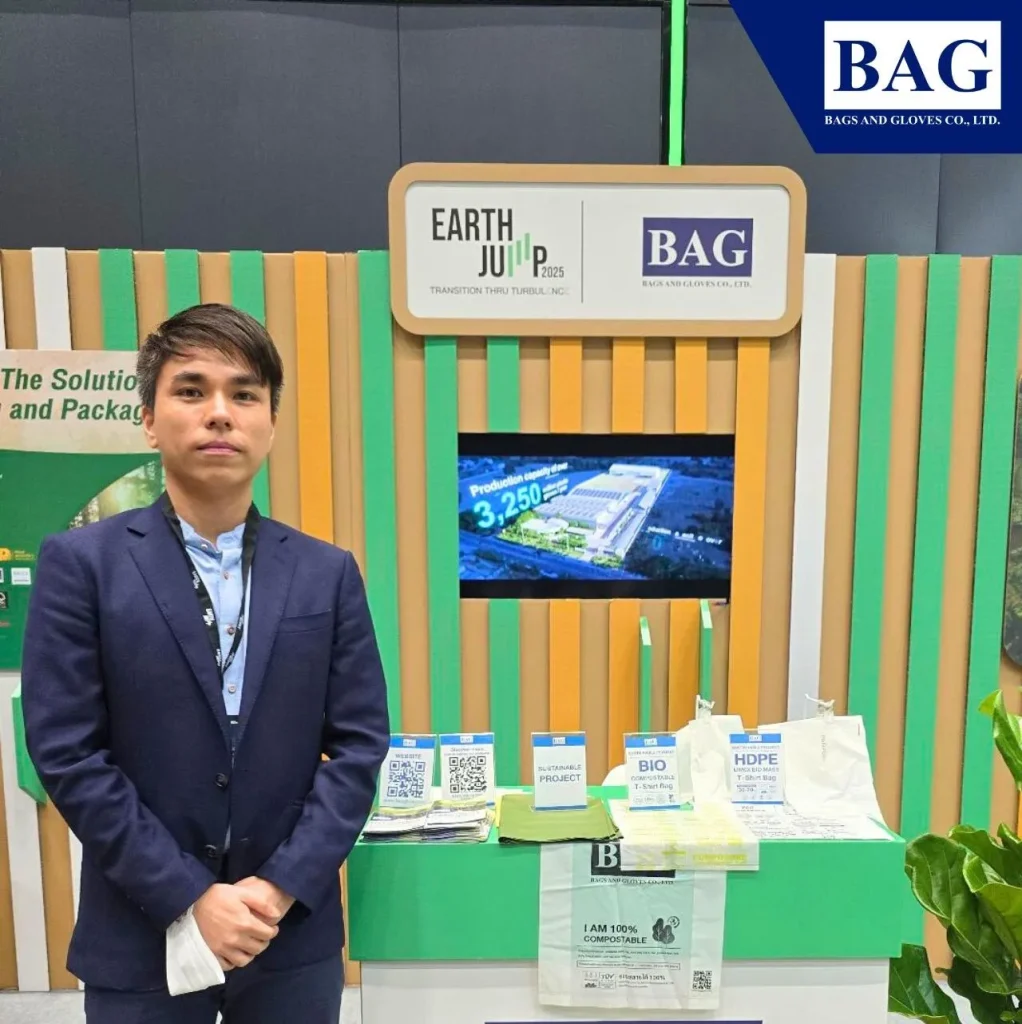
Managing Director Jitanan “Woonsen” Sitthi-ampai attended the event in person.
The seminar brought together companies from across the plastics value chain — resin producers, converters, research institutes and banks — to discuss Europe’s new packaging rules and how Thai manufacturers can adapt.
What is PPWR, and how is it different from PFAS?
PPWR (the Packaging and Packaging Waste Regulation) is the European Union’s law on packaging and packaging waste. Most of its rules have applied since 12 August 2026. It covers all packaging sold in the EU. Rules on recyclability and minimum recycled content start in 2030.
PPWR and PFAS are often confused. Here is the simple difference:
- PPWR is a law. It is the full rulebook for packaging.
- PFAS is a group of chemicals, often called “forever chemicals”, used to repel water and oil.
- One PPWR rule limits PFAS in food-contact packaging. That rule has applied since 12 August 2026.
Think of PPWR as the whole traffic code, and the PFAS limit as one speed limit that police already enforce.
Key takeaways from the seminar
1. The rules of the packaging business are changing: from linear to circular
The old directive (PPWD) focused on managing waste at the end of life: producers paid for it to be handled (pay-to-manage). PPWR requires packaging to be circular by design.
- Comply-to-market: manufacturers must assess and prove conformity, and prepare Technical Documentation and a Declaration of Conformity before placing packaging on the market.
- More value with fewer resources: packaging is no longer a tool to drive sales by using more material.
- Design is a market-access condition: packaging must meet criteria on substances of concern, minimisation and recyclability. Design also affects EPR (extended producer responsibility) fees.
2. How Thai industry should adapt
- Exporters and brand owners: identify products and packaging sold to the EU, review recycled-content requirements, assess single-use versus reuse, and prepare composition and traceability data.
- Packaging makers and converters: design for recyclability, cut weight and complexity where suitable, add post-consumer recycled plastic (PCR) while keeping the performance needed, and test and certify.
3. Start from customer needs
PPWR readiness starts by understanding the customer’s requirements, target market and timeline. Next, review the product’s material structure. Then develop and trial suitable materials together.
4. Circularity needs the whole system
From waste separation and collection to material recovery facilities (MRF) and recycling — with the goal of no plastic going to landfill.
Our role in the value chain
Other booths presented resins, research, standards and green finance. Bags and Gloves showed the next step in the chain: turning film into products people use every day, with film expertise since 1996.
At our booth, visitors could see and touch:
- CPE, HDPE and Hybrid plastic gloves, including a black version
- Aprons, arm covers and plastic bags
- Our certifications: ISO 9001, ISO 14001, ISO 13485, BRCGS Packaging Materials and TÜV AUSTRIA OK compost INDUSTRIAL
Our key message was “Protecting only the hands may not protect the whole process.” Protective products should be chosen for the real job, not for price alone. Plastic gloves suit light work, short contact, frequent changes and low-risk tasks.
For companies exporting to Europe, PPWR readiness starts with clear data for each packaging item: material type, composition and weight. Our team can review bag specifications and help prepare this information.
Bags and Gloves thanks the FTI Petrochemical and Plastics Industry Clubs and MTEC for the opportunity, and every visitor who stopped by our booth.
Need advice on bag specifications or protective wear? Send us your question on LINE, or request a quote. Our team will help you choose the right product for your work.
Bags and Gloves Co., Ltd.
A manufacturer that knows its products, and a partner that understands your process.