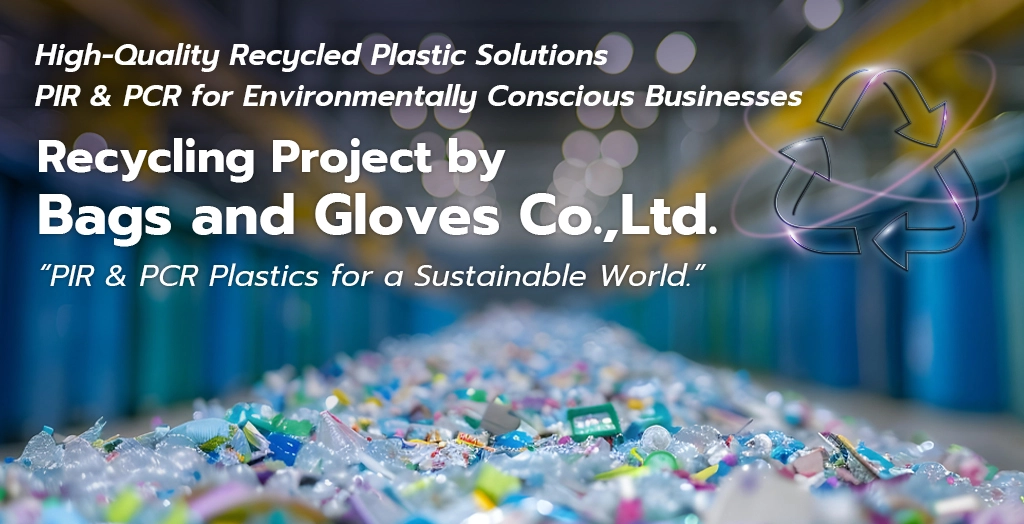
Sustainability commitment we truly deliver
At Bags & Gloves Co., Ltd., we don’t just discuss sustainability—we actively implement it through rigorous waste management in our production process. Our facility launched a dedicated “Recycling Project” to significantly reduce our environmental impact while delivering products that maintain uncompromised quality and are planet-friendly.
This program focuses on manufacturing high-quality recycled products from two primary material types: PIR (Post-Industrial Recycled), which is internal scrap material from our manufacturing processes, and PCR (Post-Consumer Recycled), which involves reprocessing used plastics. This initiative demonstrably reduces plastic waste and lowers the consumption of virgin natural resources.
PIR and PCR Recycled Materials: The Sustainable Choice
Utilizing PIR and PCR not only contributes to reducing the volume of plastic waste but also serves as a crucial, sustainable alternative for customers seeking quality goods with a tangible reduction in environmental footprint.
- PIR (Post-Industrial Recycled): This is production scrap material that we redirect back into manufacturing new products instead of disposing of it as waste. The advantages are clear: the material is clean, quality control is highly effective, and factory waste is reduced efficiently.
- PCR (Post-Consumer Recycled): This material comes from plastics discarded by consumers, which are then sorted, processed, and reintroduced into the production cycle. The use of PCR helps divert plastic waste from the environment and actively supports the Circular Economy, promoting sustainability within the Thai plastics industry.
Innovating Materials for a Greener World
Beyond utilizing recycled content, we continuously develop innovative materials to ensure greater sustainability for our customers and the planet, including:
- Low Carbon Material: Materials featuring low carbon dioxide emissions during their production, helping to mitigate global warming.
- Renewable Resources: Materials sourced from renewable origins, such as bio-based plastic pellets (derived from sugarcane, corn, or cassava) or certified Compostable materials, which reduce reliance on fossil resources.
- High-Grade PCR/PIR: Recycled plastics that undergo strict selection and quality control, ensuring they are functional, durable, and genuinely reusable.
Choosing these materials helps minimize environmental impact while providing customers with durable, effective products that meet the demands of modern businesses focused on corporate social and environmental responsibility (CSR/ESG).
The Advantages You Gain
When you select our recycled products, you benefit from:
| Benefit | Description |
| Sustainable Material Choice | High-quality, genuinely eco-friendly products—not merely greenwashing. |
| Plastic Waste Reduction | Becoming a partner in reducing waste and conserving natural resources. |
| International Standards Compliance | Ideal for businesses with robust ESG policies or a need for eco-certified products. |
| Competitive Pricing | Gaining quality and sustainability at a cost-effective price point. |
Our Vision for a Sustainable Future
Our Recycling Program is more than just waste management; it is a profound commitment to creating a sustainable plastics industry for a cleaner, safer world for everyone.
We firmly believe that environmentally responsible production is the future of the Thai plastics industry, and we are ready to lead this transformation. We drive this change through continuous innovation in PIR, PCR, Low Carbon Material, and Renewable Resources.
Because we are not just manufacturing plastic bags or gloves—we are creating solutions that enable your business to grow alongside global sustainability.