
Reforestation is one of the most effective natural solutions for reducing carbon dioxide (CO₂) in the atmosphere. By restoring forested areas that have been degraded or lost, reforestation enhances the planet’s capacity to absorb CO₂ through photosynthesis. Forests act as powerful carbon sinks, storing carbon in trunks, branches, leaves, and root systems. This natural process plays a vital role in mitigating global warming and addressing climate change.
How Photosynthesis Supports Climate Action
Trees in restored forests use sunlight, water, and carbon dioxide to generate energy in the form of glucose (C₆H₁₂O₆) and release oxygen (O₂) back into the atmosphere. This process:
- Reduces CO₂ levels in the air
- Helps regulate global climate patterns
- Maintains ecological balance across ecosystems
Reforestation not only improves air quality but also strengthens biodiversity and natural resilience.
Carbon Sequestration Potential of Different Tree Species
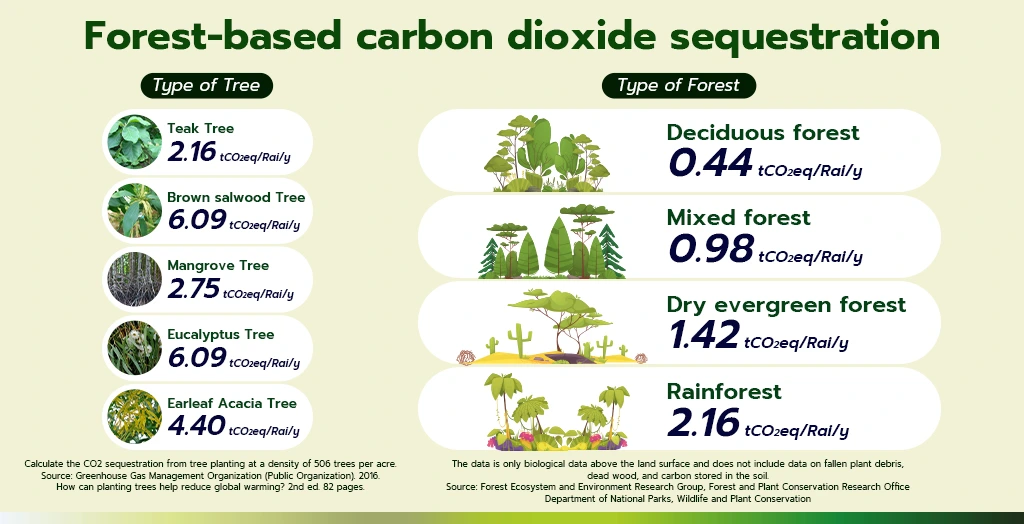
Forestry research shows that various tree species and forest types differ in their ability to absorb and store carbon. Below are examples of average carbon sequestration rates:
By Tree Species
- Eucalyptus & Acacia mangium: ~6.09 tCO₂eq/rai/year
- Acacia auriculiformis: ~4.40 tCO₂eq/rai/year
- Teak: ~2.16 tCO₂eq/rai/year
- Mangroves: ~2.75 tCO₂eq/rai/year
By Forest Type
- Newly established forests: 0.44 tCO₂eq/rai/year
- Mixed deciduous forests: 0.98 tCO₂eq/rai/year
- Restored forests: 1.42 tCO₂eq/rai/year
- Tropical evergreen forests: up to 2.16 tCO₂eq/rai/year
These variations highlight the importance of selecting suitable species and forest types to maximize long-term carbon storage through reforestation programs.
Reforestation’s Role in Carbon Neutrality and Net-Zero Strategies
Many organizations and businesses worldwide are integrating reforestation initiatives into their environmental sustainability plans. These efforts support global commitments to Carbon Neutrality and Net Zero Emissions by:
- Reducing overall greenhouse gas concentrations
- Improving air quality and increasing oxygen production
- Restoring ecosystems and enhancing biodiversity
- Supporting carbon credit schemes and promoting the green economy
Through reforestation, businesses can offset emissions, strengthen environmental stewardship, and contribute to a healthier planet.