
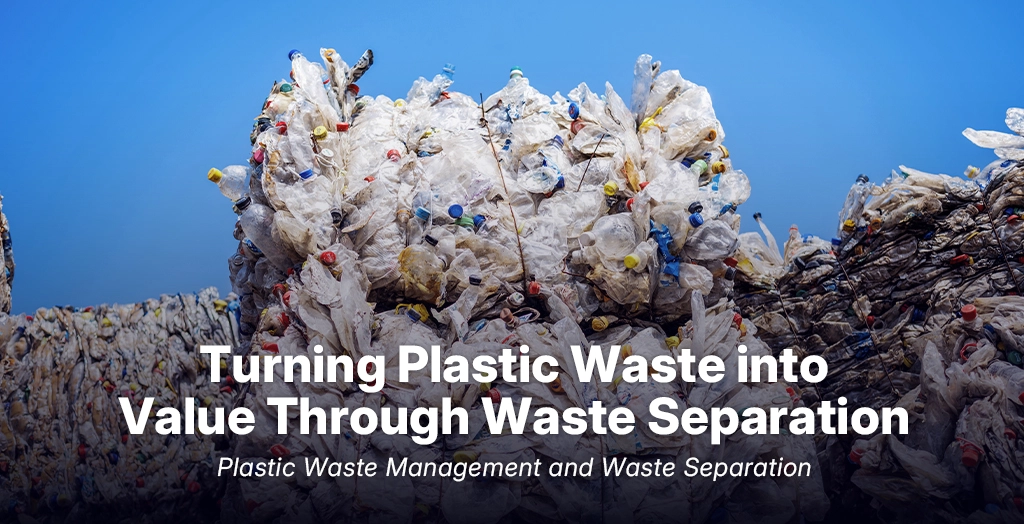
“Plastic” is arguably the biggest villain in today’s environmental discussions. Many try to avoid it completely, but in reality, plastic plays an indispensable role in our daily lives—ensuring food safety, maintaining hygiene, providing product security, and keeping costs accessible.
Therefore, the real question we should be asking isn’t “How do we stop using plastic altogether?” but rather, “How can we manage plastic to minimize its environmental footprint?” The answer lies at the very beginning of the disposal chain: Plastic Waste Separation.
Debunking the Myth: Not All Plastics Are Created Equal
A major misconception is that “plastic is just plastic.” However, different plastics possess entirely different chemical structures and are engineered for distinct purposes:
- Some are designed to be recycled into new products.
- Some are best utilized for waste-to-energy recovery.
- Some are formulated to completely compost back into nature.
When these plastics are tossed into a single bin, their individual benefits instantly vanish. For instance, throwing a compostable bag into a batch of recyclable plastics contaminates the recycling stream, ruining the entire batch. Mixed plastic waste equals wasted potential.
Unlocking Value: Turning Waste into the New Raw Material
Proper plastic separation acts as a logistical green channel, ensuring each type of plastic reaches its maximum potential instead of rotting in a landfill for centuries:
| Separated Plastic Type | Optimal Destination | Environmental & Business Impact |
| Recyclable Plastics | Processing & Pelletizing plants | Circulates back into production under the Circular Economy, saving virgin resources. |
| Energy-Recovery Plastics | Controlled Waste-to-Energy incinerators | Converts non-recyclable waste into clean electricity. |
| Compostable Plastics | Industrial or Home composting systems | Breaks down into organic, nutrient-rich soil conditioners. |
“Separated waste is no longer a dead end; it becomes premium raw material for the next cycle.”
Why Even the Best Waste Infrastructure Fails Without Separation at Source
We often criticize waste management systems for being inefficient. But the brutal truth is this: No matter how advanced a recycling facility is, it cannot effectively process a mountain of heavily mixed, contaminated waste.
Separating plastic at the source—in our homes and offices—is the ultimate master key. By sorting waste before it leaves your hands, you dramatically decrease the volume of trash destined for landfills. Effective waste management doesn’t start at the recycling plant; it starts at the exact moment you choose which bin to use.
FAQ
Q1: Can compostable or biodegradable plastics be thrown into the regular plastic recycling bin?
A: Absolutely not. Compostable plastics act as contaminants in traditional recycling streams (like PET or HDPE). If they melt together during the recycling process, they degrade the quality of the recycled plastic, rendering the entire batch brittle and useless. They must be composted separately.
Q2: Are plastic wraps, films, and grocery bags recyclable? How should they be sorted?
A: Yes, these are classified as “stretchy plastics” (usually LDPE or PP) and are highly recyclable. The strict rule is that they must be clean and dry—free of food oil and grease. You can collect them in a single bag and drop them off at dedicated soft-plastic recycling hubs or drop-off points.
Q3: Why bother separating plastic at home if trash trucks just mix them all together anyway?
A: This is a common frustration, but things are shifting rapidly. Modern municipal waste trucks now feature separate compartments or color-coded bag systems. More importantly, pre-sorting your plastic keeps it clean from organic food waste, allowing waste collectors to easily channel it directly to recycling facilities instead of sending it straight to a landfill.