
Imagine you’re holding your smartphone — inside are hundreds of tiny circuit boards, thousands of wires, and countless plastic components. The question is: are there hidden hazardous substances in there? And if so, where do they end up when you throw this phone away?
This is why RoHS was created — to ensure the electronic devices we use every day don’t harbor invisible dangers, whether they’re phones, computers, home appliances, or industrial equipment.
What Is RoHS? (Restriction of Hazardous Substances)
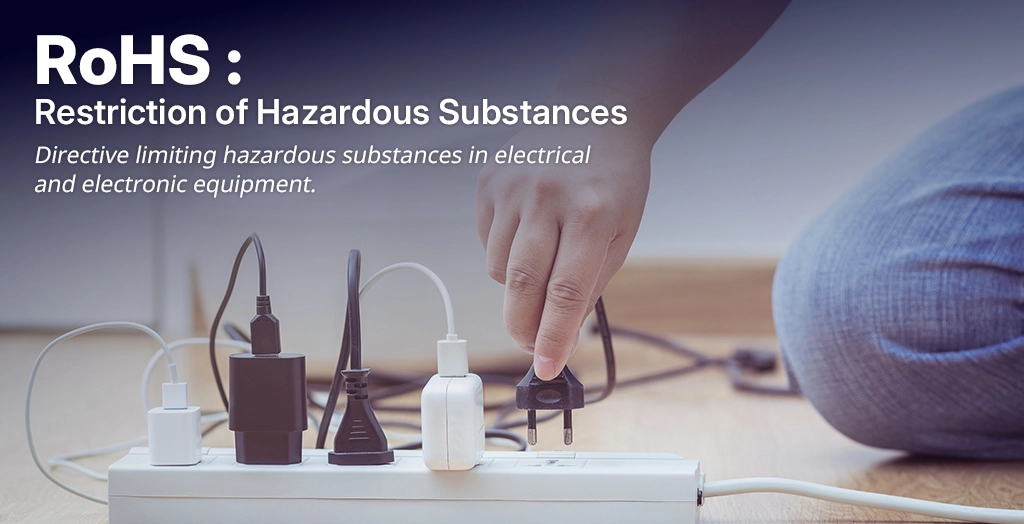
RoHS stands for Restriction of Hazardous Substances. It’s a European Union regulation (Directive 2011/65/EU) that restricts the use of certain hazardous chemicals in electrical and electronic equipment (EEE).
First enacted in 2006 (RoHS 1), it was updated to RoHS 2 in 2011, and most recently expanded to RoHS 3 with additional restricted substances. This regulation doesn’t just affect European manufacturers — it applies to anyone who wants to sell electronics in the EU, including manufacturers from Asia, the Americas, and beyond.
Why Does RoHS Matter? (Even If You Don’t Work in a Factory)
RoHS isn’t just about electronics factories — it affects everyone who uses electrical devices. Here’s why:
1. Protecting Human Health
Substances restricted by RoHS — such as lead, mercury, and cadmium — are toxic to the nervous system, brain, kidneys, and reproductive system. Children and pregnant women are especially vulnerable. Reducing these substances in products means reducing risk to consumers and factory workers alike.
2. Addressing Electronic Waste (E-Waste)
Every year, the world generates over 50 million tons of electronic waste — and that number is rising fast. When phones or computers containing heavy metals are discarded, these toxins leach into soil and groundwater. RoHS makes recycling safer and reduces environmental contamination.
3. Mandatory Market Access Requirement
If your product doesn’t comply with RoHS, you cannot sell it in the EU — period. No exceptions. Products will be detained at customs, and you may face fines or a permanent market ban.
4. Building Brand Trust
Modern consumers care about the environment and safety. RoHS compliance signals that your brand takes responsibility seriously — a significant competitive advantage.
The 10 Restricted Substances (And Why They’re Dangerous)
RoHS sets maximum concentration limits for 10 substances in homogeneous materials:
| Substance | Common Uses | Health Risks | Limit |
| Lead (Pb) | Solder, batteries, PCBs | Brain & nerve damage | 0.1% |
| Mercury (Hg) | Switches, sensors, lamps | Kidney & nerve toxicity | 0.1% |
| Cadmium (Cd) | Batteries, pigments, coatings | Carcinogenic, kidney damage | 0.01% |
| Hexavalent Chromium | Metal coatings, anti-corrosion | Carcinogenic, lung damage | 0.1% |
| Phthalates (4 types) | Cables, soft plastics | Hormone disruption | 0.1% |
Note: Cadmium has a stricter limit (0.01%) due to its severe toxicity.
What Products Does RoHS Cover?
RoHS covers nearly all types of Electrical and Electronic Equipment (EEE), including:
- IT & Telecommunications: Computers, phones, routers, servers
- Home Appliances: Refrigerators, washing machines, microwaves, vacuum cleaners
- Lighting Equipment: LED bulbs, lamps, flashlights
- Power Tools: Drills, saws, industrial equipment
- Medical Devices: Blood pressure monitors, glucose meters (some exemptions apply)
- Toys & Sports Equipment: Electronic games, electric fitness equipment
Exemptions: Military equipment, space applications, specialized R&D equipment, and certain medical devices with specific exemptions.
RoHS Compliance: What Manufacturers Must Do
Achieving RoHS compliance isn’t a one-time test and done — it’s an ongoing process from design through production:
1. Material Assessment and Testing
Manufacturers must test every homogeneous material in the product — meaning materials that cannot be mechanically separated into different components, such as:
- An entire printed circuit board
- A single type of plastic used in cable sheathing
- Each type of solder alloy
- Metal plating on component surfaces
2. Supply Chain Management
Manufacturers must obtain certification documents from every supplier (Material Declarations, Test Reports) to ensure every component is free from restricted substances. This is where many companies struggle — tracking and verifying Tier 2 and Tier 3 suppliers is extremely challenging.
3. Design for Compliance
Engineers must select RoHS-compliant materials and components from the design phase, such as:
- Using lead-free solder
- Choosing plastics without restricted flame retardants
- Using compliant resistors and capacitors
4. Documentation and CE Marking
Once the product passes testing, manufacturers must create Technical Documentation and self-declare conformity (Declaration of Conformity) before affixing the CE Mark — the symbol indicating the product is safe and compliant with EU law.
Costs and Challenges of RoHS Compliance
RoHS compliance has real costs in both money and time:
- Testing costs: Testing one substance in one material sample can cost hundreds of dollars; products with many components can run into tens of thousands
- Substitute material costs: Compliant materials often cost 10-30% more than traditional materials
- Process modifications: Lead-free solder requires higher temperatures; may require new equipment investments
- Documentation management: Must maintain test and certification records for at least 10 years
But remember: The cost of non-compliance is far higher — detained products, fines, and lost credibility in the EU market.
Benefits of RoHS Compliance
Beyond legal compliance, RoHS brings:
- Access to major markets: The EU electronics market is worth trillions of euros
- Competitive advantage: RoHS-compliant brands earn greater trust
- Readiness for other markets: Many countries (China, South Korea, Japan) have similar RoHS-like regulations
- Driving green innovation: Encourages development of safer materials and processes
The Bottom Line: RoHS Is the New Electronics Standard
RoHS isn’t just a regulation to comply with — it’s a compass pointing the electronics industry toward safety and sustainability.
In the future, standards like this won’t be the exception — they’ll be the global norm. Manufacturers who prepare today will have a massive advantage over competitors who wait until they’re forced to comply.
Frequently Asked Questions
Q: How is RoHS different from REACH?
A: RoHS focuses specifically on electronics and restricts 10 substances. REACH covers all chemicals in all products but can overlap with RoHS in some cases.
Q: Do components imported from China need to be RoHS compliant?
A: If those components will be used in a final product sold in the EU, they must be RoHS compliant — regardless of their country of origin.
Q: Do we need to test every production run?
A: Not necessarily. If materials and processes remain unchanged, retesting isn’t required — but you must maintain certification documents and have robust quality control systems.
Q: What is the CE Mark and how does it relate to RoHS?
A: The CE Mark indicates a product is safe and complies with all applicable EU laws, including RoHS. Affixing the CE Mark requires a self-declaration of RoHS conformity.
—This article is provided for general informational purposes regarding RoHS and does not constitute legal advice or certification. For official testing and certification, please contact a