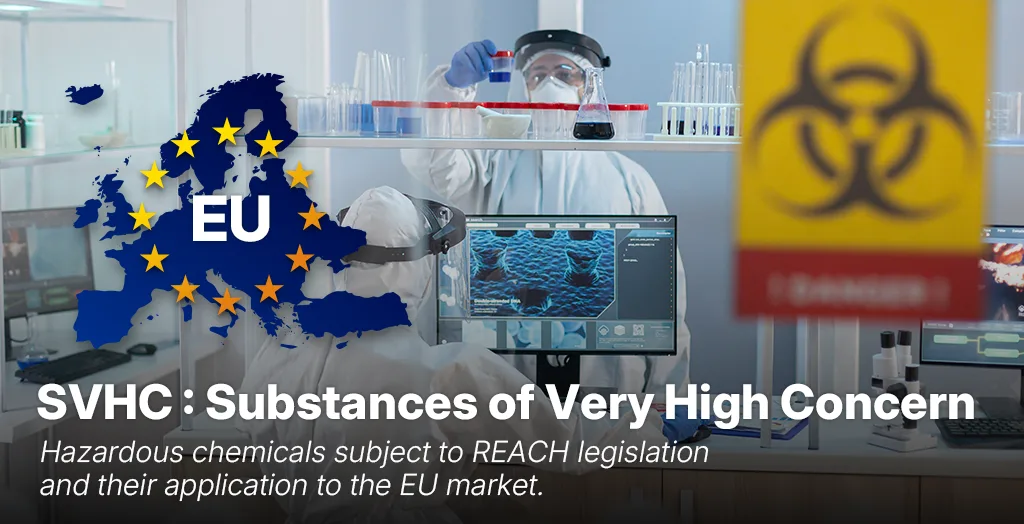
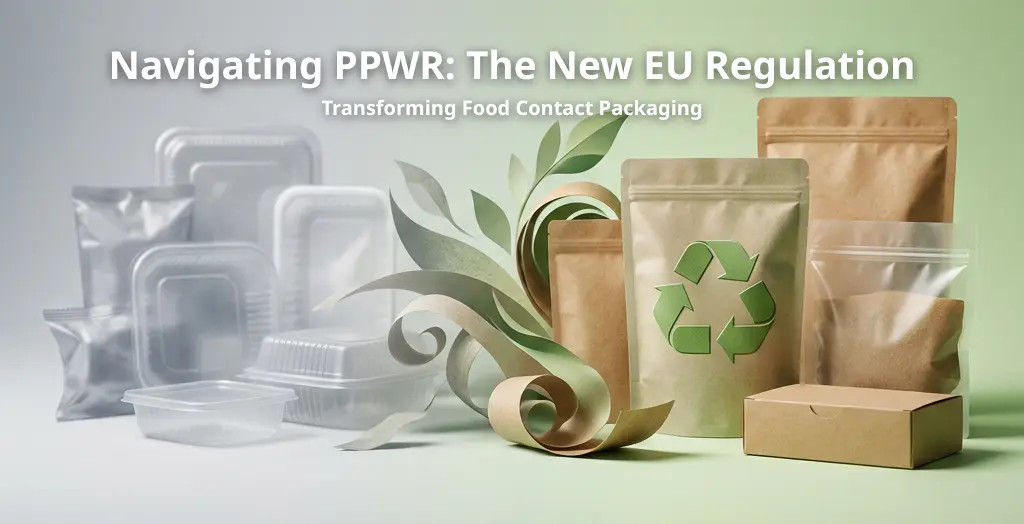
For manufacturers, importers, and exporters operating within or selling to the European Union (EU), the business landscape is undergoing a monumental shift. The catalyst? PPWR (Packaging and Packaging Waste Regulation)—the EU’s latest framework designed to overhaul the entire packaging lifecycle, including the highly regulated sector of Food Contact Packaging.
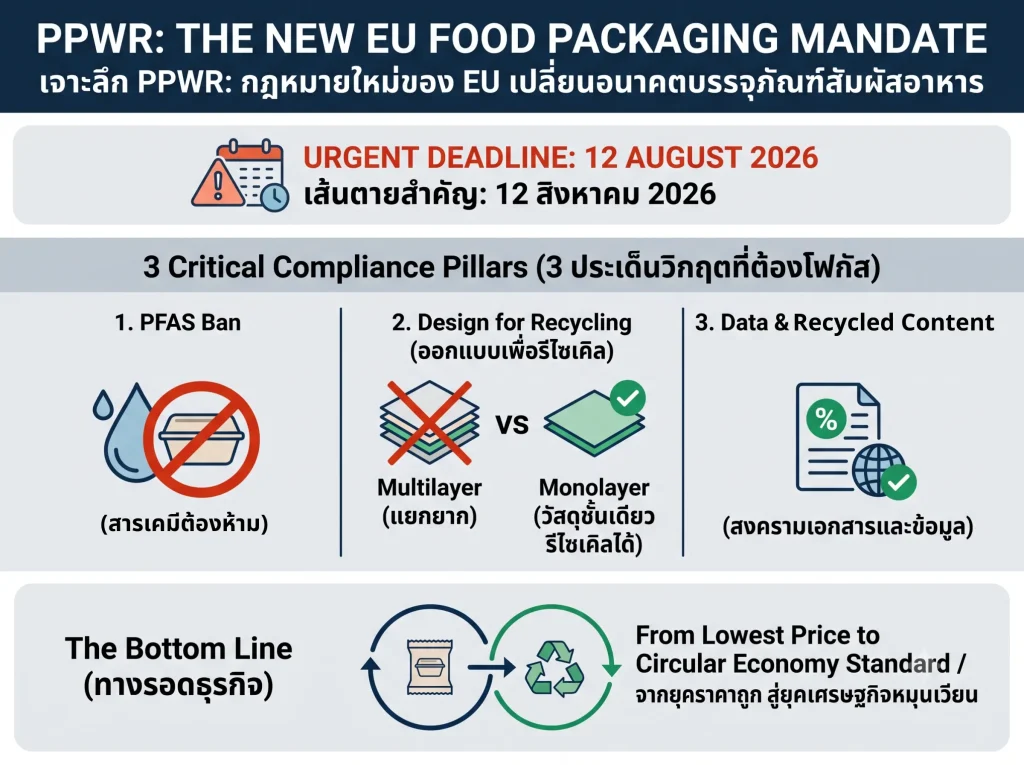
The defining characteristic of PPWR is its legal status. Unlike the old directive (PPWD) which allowed member states to implement rules loosely, PPWR is a strict Regulation. This means it applies directly and uniformly across all 27 EU nations. Major milestones of this regulation are set to take full effect on August 12, 2026.
The Core Objectives of PPWR: Designing Out Waste
Applying to all material classes—be it glass, paper, plastic, metal, or composites—PPWR targets five sustainable transformations:
- Reduce packaging waste volumes aggressively.
- Enhance baseline recyclability metrics.
- Drive the expansion of a true Circular Economy.
- Eliminate hazardous chemical substances.
- Enforce radical transparency in supply chain documentation.
Beyond Food-Grade: The New Pillars of Compliance
Historically, compliance for plastic food packaging in the EU revolved primarily around safety and migration limits under EU Regulation No.10/2011. While food safety remains non-negotiable, PPWR introduces an entirely new tier of environmental benchmarks. Manufacturers must immediately address three major operational updates:
1. The Imminent Ban on PFAS (Forever Chemicals)
PFAS (Per- and Polyfluoroalkyl Substances), notoriously known as “Forever Chemicals,” have long been the industry standard for adding water, oil, and grease resistance to packaging. Due to their inability to break down in nature and their bio-accumulative risks in humans, PPWR draws a hard line. Food contact packaging containing PFAS above established thresholds will be banned from the EU market starting August 12, 2026.
2. Mandatory Design for Recycling (D4R)
Packaging architecture can no longer be evaluated solely on its shelf-life performance; its post-consumer destiny is now a primary design metric. For instance, while high-barrier multilayer films excel at food preservation, they are incredibly difficult to recycle compared to modern monolayer structures. The industry must pivot toward mono-materials to ensure compliance.
3. The Shift Toward Data-Driven Supply Chains
The era of providing a simple Declaration of Compliance (DoC) is drawing to a close. Global buyers are now demanding verified data sheets detailing the exact percentage of recycled content (% PCR), comprehensive chemical mapping, verified recyclability ratings, and explicit PPWR alignment documentation.
Actionable Steps for Packaging Manufacturers
Future-proofing your business against these upcoming deadlines requires immediate operational shifts:
- Audit Current Product Architectures: Evaluate your active product portfolio for potential chemical liabilities or unrecyclable material blends.
- Engage Upstream Suppliers: Secure certified ingredient lists and compliance statements regarding PFAS and raw material origins from your suppliers.
- Systematize Technical Documentation: Update your QA/QC data management systems to generate compliance reports seamlessly for international clients.
The Consumer Perspective: While PPWR places the operational burden on businesses, the end consumer wins. This law guarantees safer, chemical-free food packaging, simplified recycling experiences, and transparent product declarations right on the shelf.
Conclusion
PPWR is not just another environmental box to check; it is completely redefining global manufacturing. Moving forward, market competitiveness will no longer rest solely on quality, aesthetics, or low pricing. Instead, businesses will be judged on one fundamental question: “How well does this packaging fit into a circular economy?” Companies that adapt their materials and data systems today will capture the market share of tomorrow.
FAQ
Q1: If our company manufactures paper-based food packaging rather than plastic, are we exempt from PPWR?
A: Absolutely not. PPWR covers all packaging materials uniformly. Paper-based food contact items (such as takeout boxes, burger wraps, and paper bags) are under heavy scrutiny, particularly regarding added PFAS for grease resistance. They must prove they are chemical-safe and easily recyclable within standard paper mills.
Q2: What are the penalties if an exported product fails to comply with PPWR standards upon reaching the EU?
A: Non-compliant packaging faces an immediate market ban, meaning your goods will be blocked from distribution within the EU. Furthermore, European importers and distributors can face steep financial penalties levied by individual member states. This often leads to severe brand damage and the termination of commercial supply contracts.
Q3: Can food contact packaging safely incorporate recycled plastics to meet PPWR mandates?
A: Yes, but with strict conditions. Any recycled plastic intended for direct food contact must originate from processes and recycling facilities officially approved as Food-grade Recycled Plastics by the European Food Safety Authority (EFSA). Standard commercial recycled resins cannot be used due to potential chemical contamination risks.