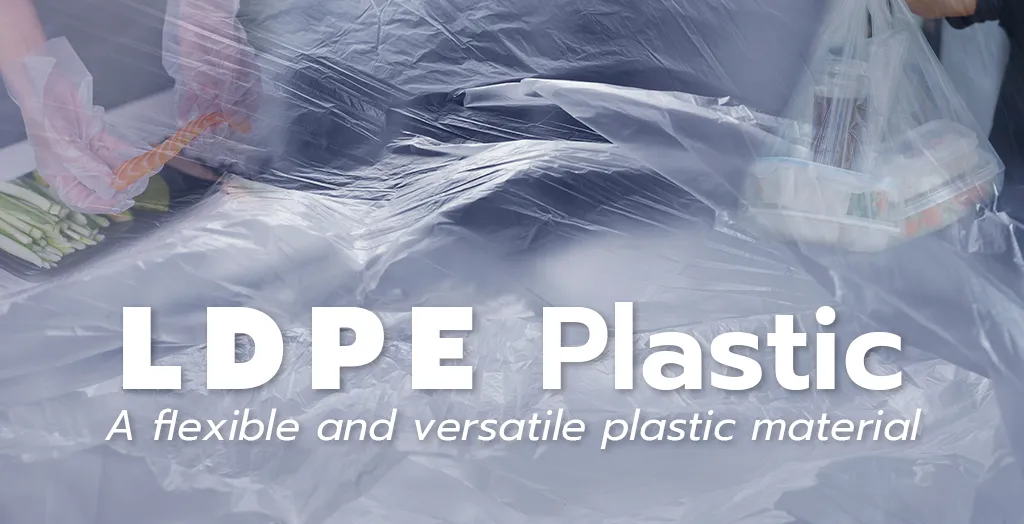


In the food production, food service, supermarket, and hospitality sectors, single-use plastic gloves serve as a critical tool for maintaining Good Hygiene Practices (GHP). They offer a convenient, straightforward method to ensure cleanliness and prevent direct skin-to-product contact—all within a highly manageable budget.
However, selecting the right glove involves understanding the specific material codes: HDPE, LLDPE, CPE, and Hybrid. While they share a similar transparent appearance, their physical properties and functional designs are crafted for distinct tasks. Aligning the specific characteristics of each glove type with your operational needs ensures the ideal balance of efficiency, comfort, and cost-effectiveness.
Understanding the Unique Material Profiles
1. HDPE Gloves: Easy Donning for General & High-Turnover Tasks
- Material Profile: High-Density Polyethylene. Characterized by a relatively rigid texture, smooth surface, lightweight feel, and a loose-fitting silhouette.
- Ideal Application: Designed for quick donning and doffing, making them exceptionally practical for general tasks requiring frequent glove changes. They are widely used at front-of-house service counters, buffet self-service stations, and grocery handling, where fine motor skills are not continuously required.
2. LLDPE Gloves: Soft and Pliable for Continuous Wear
- Material Profile: Linear Low-Density Polyethylene. The molecular structure yields a film that is significantly softer, more elastic, and more puncture-resistant than traditional HDPE.
- Ideal Application: The added flexibility reduces hand fatigue and accommodates repetitive movements easily. This makes LLDPE gloves ideal for back-of-house food prep stations, vegetable chopping, and assembly lines where workers wear gloves continuously.
3. CPE Gloves: Enhanced Tensile Strength and Textured Grip
- Material Profile: Cast Polyethylene. While utilizing similar baseline resins to LLDPE, it undergoes a distinct cast film manufacturing process that delivers a uniquely textured surface.
- Ideal Application: The specialized casting process improves overall durability and ensures a more contoured, secure fit around the hand. The textured surface enhances friction, making it highly effective for handling wet or slippery items, commercial kitchen tasks, and food styling.
4. Hybrid Gloves: High Elasticity and an Ergonomic Rubber-Like Feel
- Material Profile: Formulated from Thermoplastic Elastomer (TPE) blends, combining the material integrity of plastic with the high elasticity of rubber.
- Ideal Application: Offers the highest degree of elasticity and form-fitting comfort among all PE-based variants. It allows for excellent tactile sensitivity and precision handling, perfect for intricate food styling, detailed preparation, or service roles demanding extended, uninterrupted glove wear.
Application Matrix: Matching Gloves to Business Functions
| Glove Type | Primary Material Benefit | Optimal Operational Context |
| HDPE | Swift donning/doffing, economical | General handling, fast-casual serving counter, buffet bars |
| LLDPE | Soft, flexible, puncture-resistant | Ingredient prep lines, continuous chopping, sorting lines |
| CPE | Anti-slip texture, secure fit | Commercial kitchens, processing meats, handling wet goods |
| Hybrid | Maximum elasticity, form-fitting | Intricate food decoration, high-dexterity tasks, long shifts |
FAQ:
Q1: What is the primary factor businesses should consider when choosing between these plastic gloves?
A: The most critical factor is “task duration versus replacement frequency.” For rapid, transactional tasks where a worker changes gloves every few minutes (e.g., a cashier occasionally serving pastries), HDPE provides the best speed and economic value. Conversely, for a worker performing heavy food prep for hours, LLDPE or CPE offers the necessary comfort and durability to keep operations moving efficiently.
Q2: Can these plastic gloves withstand high temperatures in commercial kitchens?
A: Polyethylene-based gloves (HDPE, LLDPE, CPE) have low thermal resistance and can melt or warp if they come into direct contact with high heat. For environments close to cooking stations, CPE or Hybrid gloves offer slightly better structural integrity due to their density, but workers should always avoid direct contact with hot cookware or boiling liquids.
Q3: How can a food business verify that their chosen gloves meet regulatory food safety standards?
A: Businesses should request a Certificate of Compliance (CoC) from their vendor. This document verifies that the gloves have passed official tests for food contact migration under international bodies, such as the US FDA or EU regulations. Reliable food-grade gloves will also feature the international “glass and fork” food-safe symbol on their packaging.