
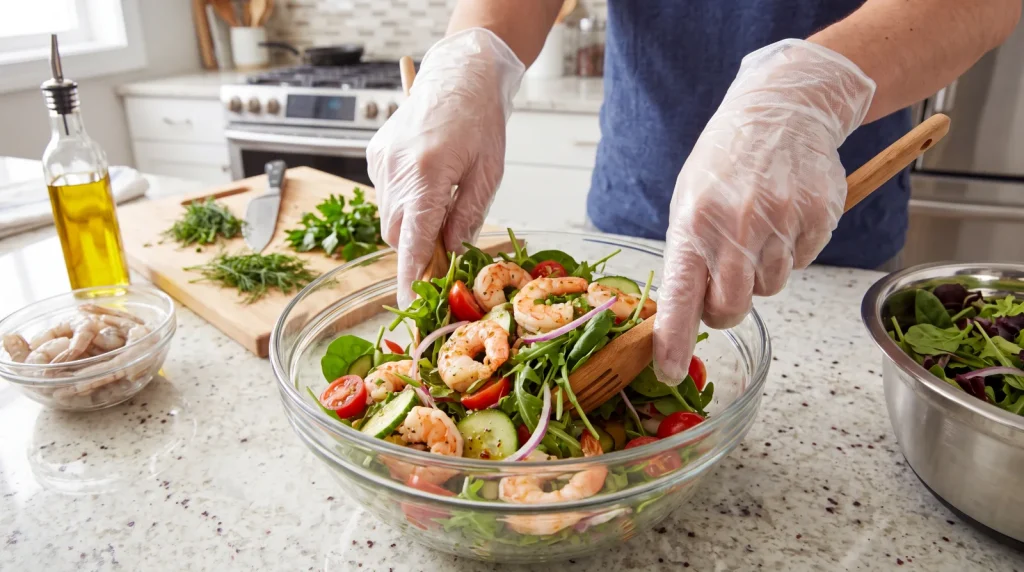
Restaurants, bakeries, salons and food factories use hundreds of plastic gloves every day. The wrong model can be loose, slippery or tear too easily, and it raises your daily cost. Bags and Gloves offers four ready-stock glove models, each made for a different kind of task. This guide helps you choose the right one in a few minutes.
All plastic gloves suit light work, short contact, frequent changing and low-risk tasks. They are not a replacement for rubber or nitrile gloves in every application.
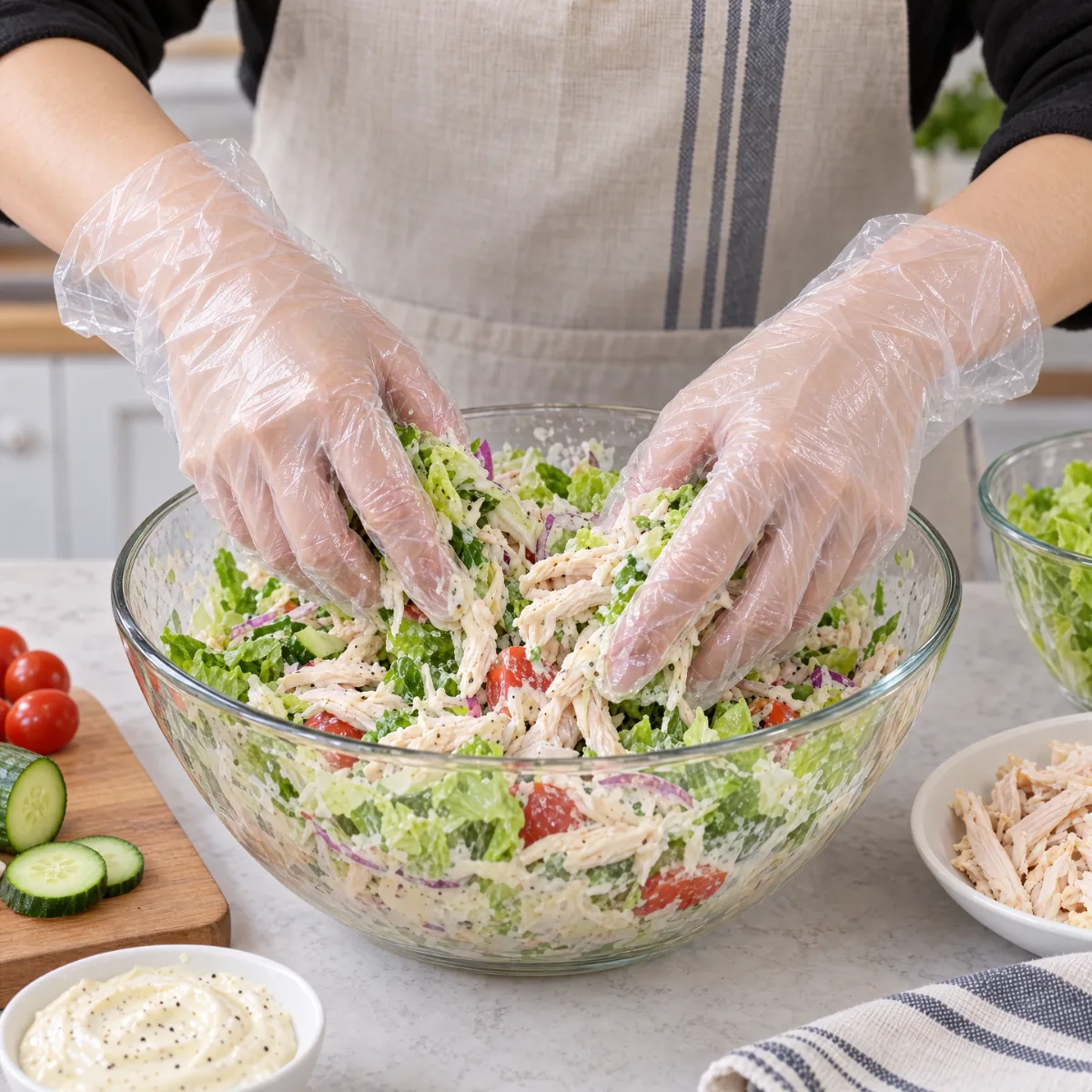
The four models at a glance
| Model | Key strength | Best for |
|---|---|---|
| Hybrid Lite | Highest stretch and closest fit; soft and stays on | Detailed work, cake decorating, bakery, hair salons and hair colouring, tasks with long wear time |
| Hybrid Diamond | Durable with a firm grip; better hold than standard plastic gloves | General food prep, plating, handling ingredients or pastries that need grip, craft work |
| CPE | Soft, smooth and light; tougher than standard HDPE | General kitchen work, ingredient prep, packing, tasks with frequent changes |
| HDPE | Lowest cost; fast to put on and take off | Short food contact, general handling, dry tasks, front-of-house service, single-use tasks |
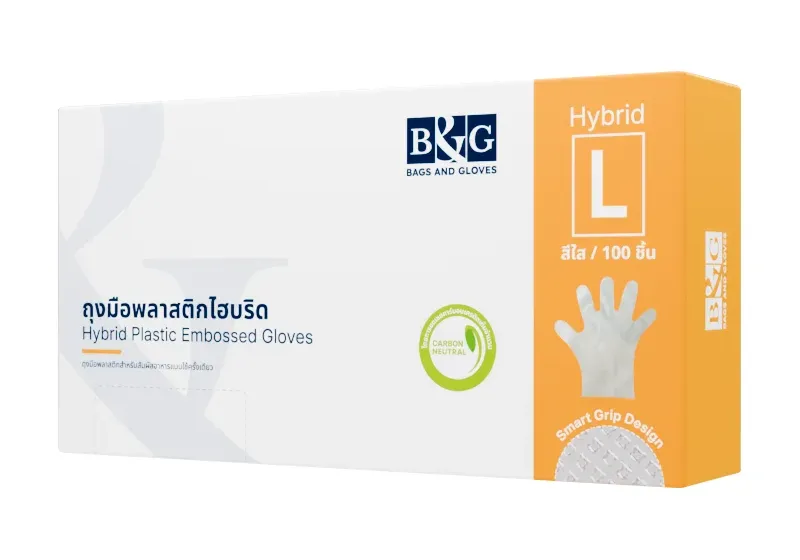
Hybrid Lite: when the task needs a close fit
Hybrid Lite stretches and fits close to the hand, similar to a rubber glove, at a lower cost. Fingers move freely, so it suits detailed work such as cake decorating, shaping pastry or hair colouring. It does not slip off easily and helps reduce hand fatigue during long wear.
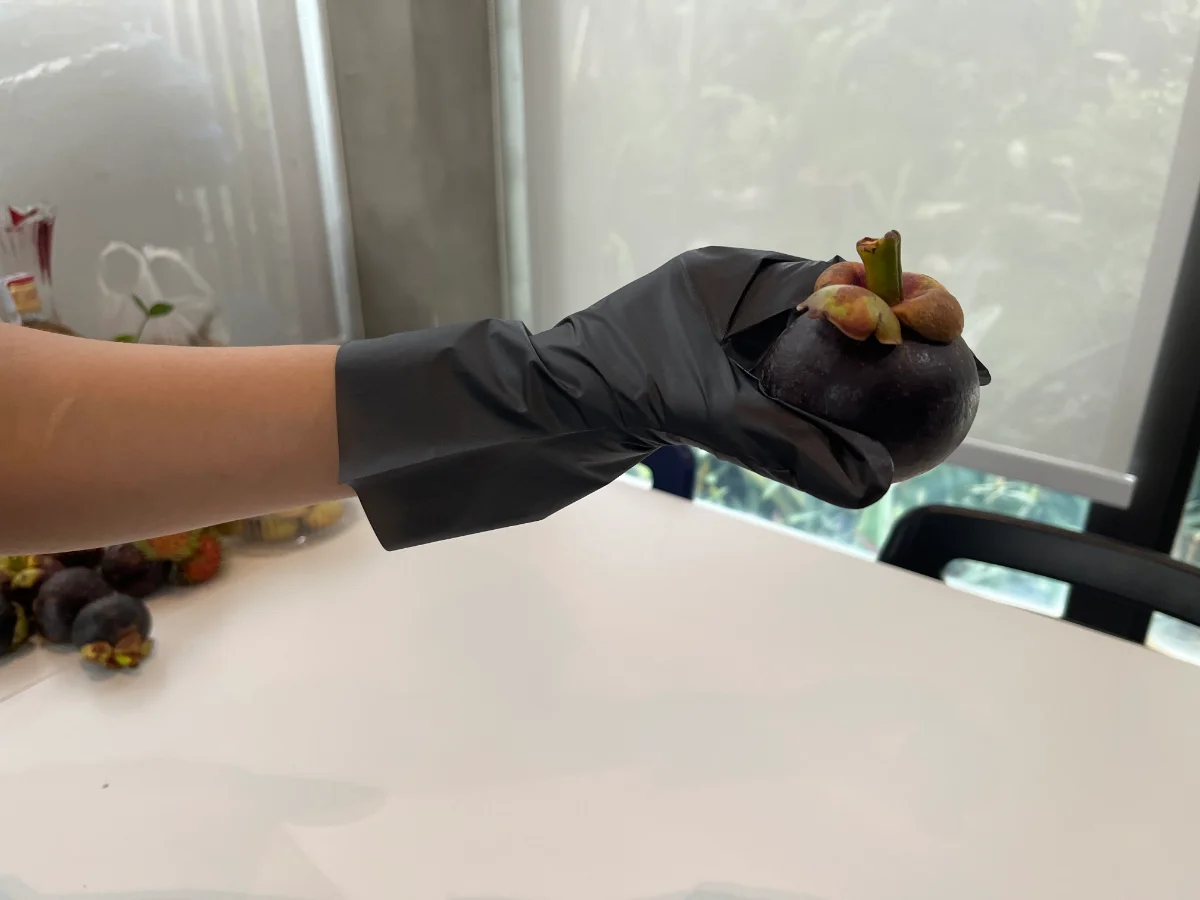
Choose it when: staff wear gloves for long periods, or say standard plastic gloves are too loose.
Hybrid Diamond: when the task needs grip

Hybrid Diamond feels soft, has medium stretch and grips better than standard plastic gloves. Items do not slip easily. It suits handling ingredients, plating and picking up bakery items. Bakery buyers we met at trade shows asked for a glove with a secure hold, and this model meets that need.
Choose it when: the task involves small, oily or slippery items.
CPE: the balanced everyday glove

CPE gloves are soft, smooth and light, and tougher than standard HDPE. They are easy to put on and quick to change, so many kitchens and packing lines use them every day. Sizes S, M and L.
Choose it when: you want one model for most kitchen and packing stations.
HDPE: the lowest cost for short tasks

HDPE gloves are thin, light and the most cost-effective. They go on and off fast, so they suit tasks that last a few minutes, such as serving food, handing pastries to customers or front-of-house service at events.
Choose it when: you change gloves after every use and cost per pair matters most.
Pair them with HDPE aprons (15 micron)
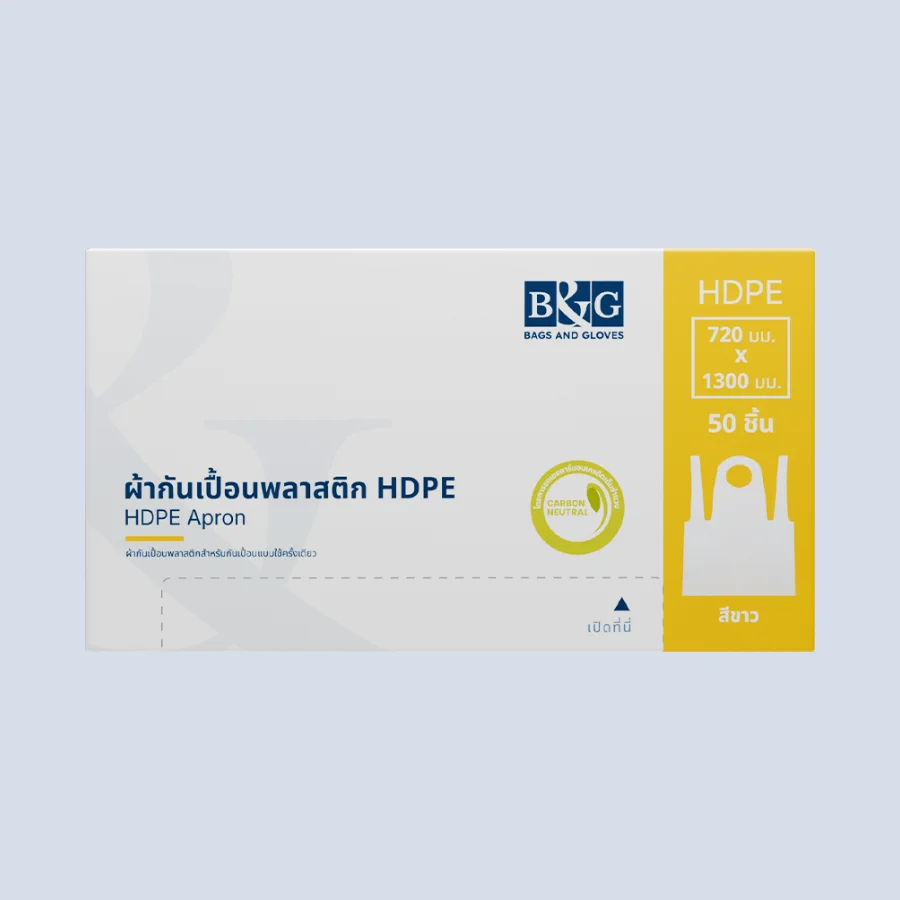
Our HDPE apron is 15 micron thick and packed 50 pieces per box. Use it with gloves to change the full set of protective wear when staff change task or area. A micron is one thousandth of a millimetre.
Choose in three questions
- How long is one pair worn? A few minutes: HDPE. Long or continuous wear: Hybrid Lite.
- Do staff handle slippery or small items? If yes: Hybrid Diamond.
- Do you want one model for many stations? Choose CPE.
Frequently asked questions
Can Hybrid gloves replace rubber gloves?
Hybrid Lite gives a close fit similar to rubber gloves for light work. It does not replace rubber or nitrile gloves in every application. For chemicals, sharp items or high-risk work, use gloves made for that risk. As the box warning states, do not use them with dangerous chemicals or for electrical work, and do not handle food hotter than 60 °C.
What is the difference between CPE and HDPE?
CPE is softer and tougher, for general tasks with slightly longer wear. HDPE is thinner and lower cost, for short single-use tasks. Read more in our HDPE vs CPE guide.
Can I order in bulk or with my own brand?
Yes. Tell us the model, size and quantity, and our sales team will send a quote. For your own specification or brand, we also make gloves as OEM (made to the customer’s specification and brand).
Order Bags and Gloves ready-stock gloves
- Request a quote from our sales team
- Product details: CPE Gloves · HDPE Gloves · HDPE Apron