
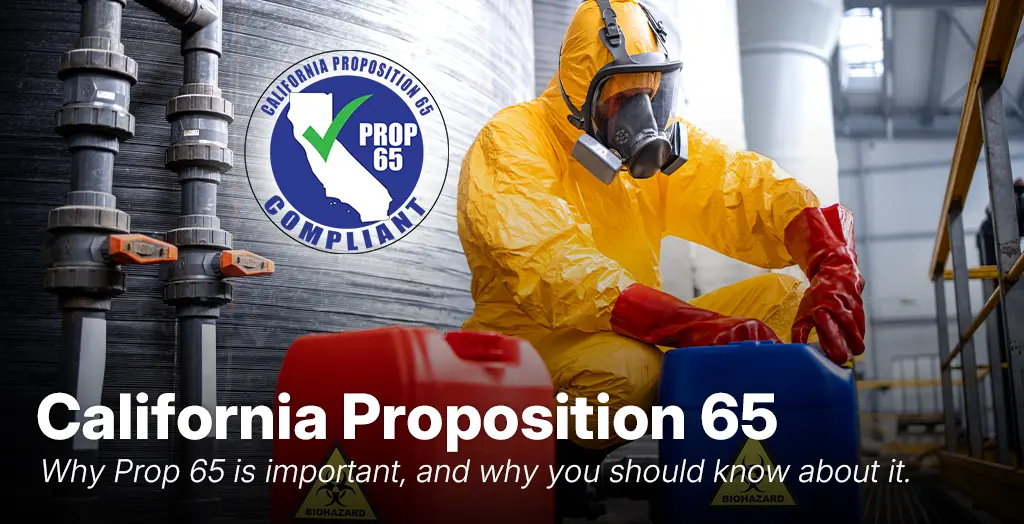
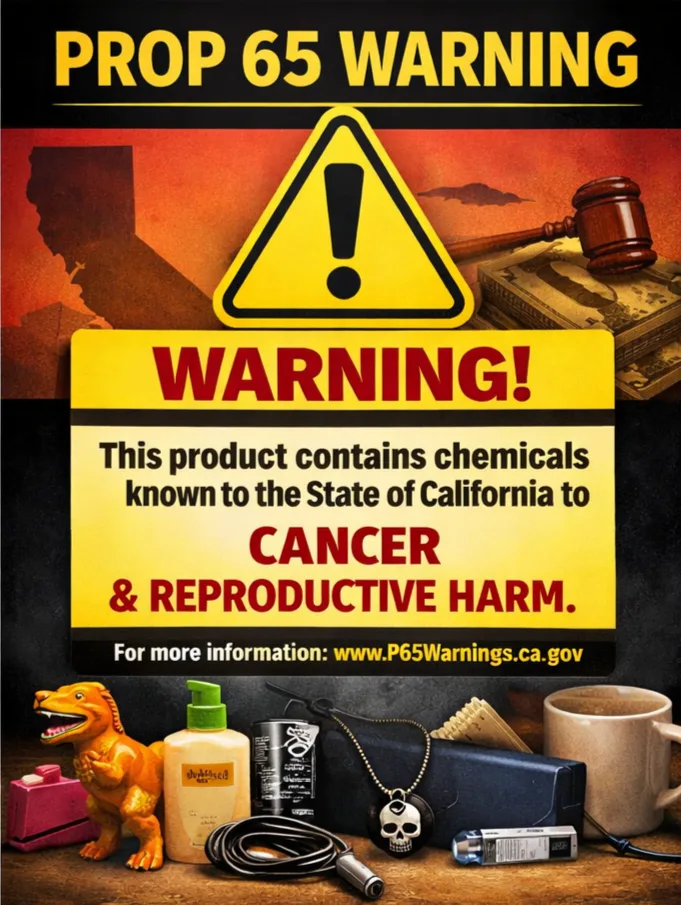
Have you ever seen a yellow label that says “WARNING: This product contains chemicals known to the State of California to cause cancer” on a product? That’s a Prop 65 warning — a label that might look alarming but is actually commonplace in California.
If you sell products in the United States, especially California, you need to understand Prop 65. Non-compliance can lead to lawsuits and fines reaching hundreds of thousands of dollars — even small businesses aren’t immune. This article explains everything you need to know in plain English.
What Is Prop 65? (California Proposition 65)
Proposition 65 (commonly called Prop 65) is a California law that requires businesses to warn consumers when products or locations contain chemicals that may cause:
- Cancer
- Reproductive Toxicity (birth defects or reproductive harm)
Critical point: This law doesn’t ban chemicals — it only requires warnings. This is a crucial distinction — you can sell products containing these substances, but you must provide clear warning labels.
The Origin of Prop 65
In 1986, California voters passed this law after discovering hazardous chemicals in drinking water and the environment. The goal was to give consumers the Right-to-Know what they’re being exposed to.
Why Should You Care About Prop 65? (Even Outside California)
You might think, “We don’t sell in California, why should we care?” Here’s why:
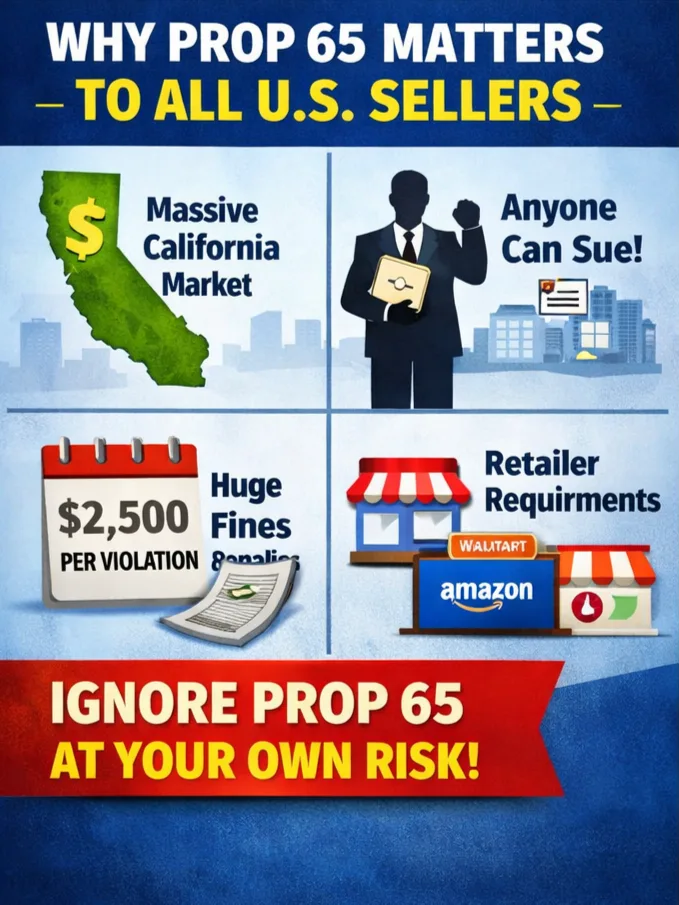
1. California = Massive Market
California is the world’s 5th largest economy — bigger than India’s. Its GDP exceeds that of the entire United Kingdom. With 40 million residents, if you sell in the US, chances are high your products will reach California.
2. Anyone Can Sue — And They Do
Here’s what makes Prop 65 particularly challenging: You don’t need government action to get sued — private individuals, attorneys, or advocacy groups can file lawsuits (called Private Enforcement). If they win, defendants pay penalties plus the plaintiff’s legal fees.
Real example: Some lawyers make their living by suing businesses over missing Prop 65 labels. They buy products, test them, then sue — it’s their business model.
3. Penalties Are Steep
Maximum penalties: $2,500 per day per violation. If you sell 100 unlabeled products in 10 stores over 30 days = potentially millions in penalties.
4. Major Retailers Require It
Walmart, Target, Amazon, Costco — they all require Prop 65 compliance documentation before accepting products. If you get sued, they get sued too. Without documentation, you can’t access these major channels.
The 900+ Chemicals Covered by Prop 65
Currently, Prop 65 lists over 900 chemicals requiring warnings, and the list grows annually. These substances appear in everyday products you wouldn’t expect to be problematic, such as:
Common Chemicals Found
- Lead: In paint, jewelry, toys, ceramics
- Cadmium: In batteries, paint, jewelry, PVC plastics
- Phthalates: In soft plastics, cables, toys, bags
- BPA (Bisphenol A): In polycarbonate plastics, can linings
- Formaldehyde: In plywood, clothing, curtains
- Flame Retardants: In plastics, foam, furniture
- Wood Dust: In furniture stores, woodworking shops
- Tobacco Smoke: In bars, casinos, smoking areas
Important: Even “naturally occurring” substances require warnings — like wood dust from cutting lumber or smoke from grilling food.
Which Products Need Prop 65 Warnings?
Almost everything — which is why Prop 65 is so complex. Examples of frequently problematic products:
1. Children’s Products and Toys
Plastic toys, metal toys, backpacks, baby bottles — anything children might handle or put in their mouths requires rigorous testing.
2. Jewelry and Fashion Accessories
Necklaces, earrings, bracelets, belts, bags, shoes — metals and plastics in fashion items often contain lead or cadmium.
3. Electronics
Cables, adapters, cases, accessories — plastics and metals in electronics commonly contain Prop 65 substances.
4. Kitchenware and Food Contact Items
Ceramics, glassware, utensils, pots, pans — especially imports from Asia, watch for lead in decorative glazes.
5. Furniture and Building Materials
Plywood, carpets, curtains, sofas — formaldehyde and flame retardants are major concerns in this category.
How to Create Proper Prop 65 Warning Labels
If your product contains Prop 65 chemicals above established levels, you must provide warnings. Here’s how to do it correctly:
1. Required Label Elements
Your label must include:
- Yellow warning triangle symbol (⚠)
- The word “WARNING”
- Statement that product contains chemicals causing cancer/reproductive harm
- Link to www.P65Warnings.ca.gov
2. Sample Warning Text
For Cancer:
⚠ WARNING: This product can expose you to chemicals including [chemical name], which is known to the State of California to cause cancer. For more information go to www.P65Warnings.ca.gov
For Reproductive Harm:
⚠ WARNING: This product can expose you to chemicals including [chemical name], which is known to the State of California to cause birth defects or other reproductive harm. For more information go to www.P65Warnings.ca.gov
3. Where to Place Warnings
- On the product itself: Best and safest option
- On packaging: If product labeling isn’t feasible
- In user manual: For products with instruction manuals
- Store signage: For retail locations (must be large and visible)
- Online: For e-commerce (must display before purchase)
What to Do If You’re Unsure
Here’s the safe approach:
Step 1: Test Your Products
Send products to accredited labs (e.g., SGS, Intertek, Bureau Veritas). They’ll test for common Prop 65 chemicals in your product category.
Step 2: Request Documentation from Suppliers
Request Certificate of Compliance, Test Reports, or MSDS (Material Safety Data Sheet). Good suppliers should have these readily available.
Step 3: When In Doubt, Label It
Simple rule: if unsure, add the warning. Unnecessary warnings aren’t illegal, but failing to warn when required = legal liability and lawsuits.
Strategies to Avoid Prop 65 Warnings (Legally)
The best approach is not needing a warning at all. Here’s how:
1. Choose Safe Raw Materials
Work with suppliers who prioritize Prop 65 compliance from the start. Tell them you need Prop 65-compliant materials.
2. Design for Compliance
Select substitute materials:
- Use stainless steel or brass instead of leaded metals
- Choose phthalate-free plastics
- Use lead-free paints and coatings
3. Make It a Brand Advantage
Instead of viewing Prop 65 as a burden, make it a competitive edge:
- “Prop 65 Compliant — No Warning Label Required”
- “Safe for California — Safe for Everyone”
- “Tested to California’s Strictest Standards”
Consumers value brands that invest in safer products — even if slightly more expensive.
Common Mistakes and How to Avoid Them
Mistake #1: “We’re Too Small to Get Sued”
Reality: There’s no “safe” business size. Even small sellers on Amazon or Etsy get sued. Lawyers often choose targets based on ease of winning, not company size.
Mistake #2: “The Supplier Is Responsible”
Reality: Sellers, importers, distributors, and retailers share equal liability. Even if you bought from a factory that claimed compliance — if it’s untrue, you’re still liable.
Mistake #3: Label Too Small or Hidden
Reality: Labels must be “clear and reasonable” — meaning easily readable size, not hidden under packaging. Tiny or concealed labels = no label at all.
Mistake #4: Using Incorrect Warning Text
Reality: Warning text must match legal requirements exactly. Changing wording or omitting the www.P65Warnings.ca.gov link = non-compliant.
Bottom Line: Prop 65 Isn’t the Enemy — It’s a Reality to Manage
Prop 65 may seem burdensome and frustrating, but it exists for good reason — protecting consumers from hazardous chemicals. What businesses need to do:
- Know what’s in your products — test and request supplier documentation
- Label correctly when necessary — don’t risk lawsuits
- Design for safety — use Prop 65-compliant materials from the start
- Turn it into a strength — make safety part of your brand
California is too large a market to ignore, and Prop 65 is the price of admission. The sooner you understand and prepare, the better your chances of success.
Frequently Asked Questions
Q: Do I need warnings for online sales?
A: Yes. Display the warning on your website before customers purchase. Many businesses use pop-ups or text in product descriptions.
Q: Does Prop 65 apply to products made outside California?
A: Yes. Prop 65 covers all products sold in California, regardless of where they’re manufactured.
Q: How long does Prop 65 testing take?
A: Typically 2-4 weeks for standard testing. May take longer for specialized chemicals or complex products.
Q: What does testing cost?
A: Depends on product type — starting around $200-500 per sample. Complex products may cost thousands, but it’s far cheaper than lawsuit penalties.
Learn More
International Sales
(+66) 2-108-2390
(+66) 95-583-3696
sales@bagglove.com
Domestic Sales
(66) 2-108-2390 ext. 104
LINE OA: @bagglove
sales.d@tna-thailand.com