When you buy a product, what crosses your mind first? Quality? Price? Convenience?
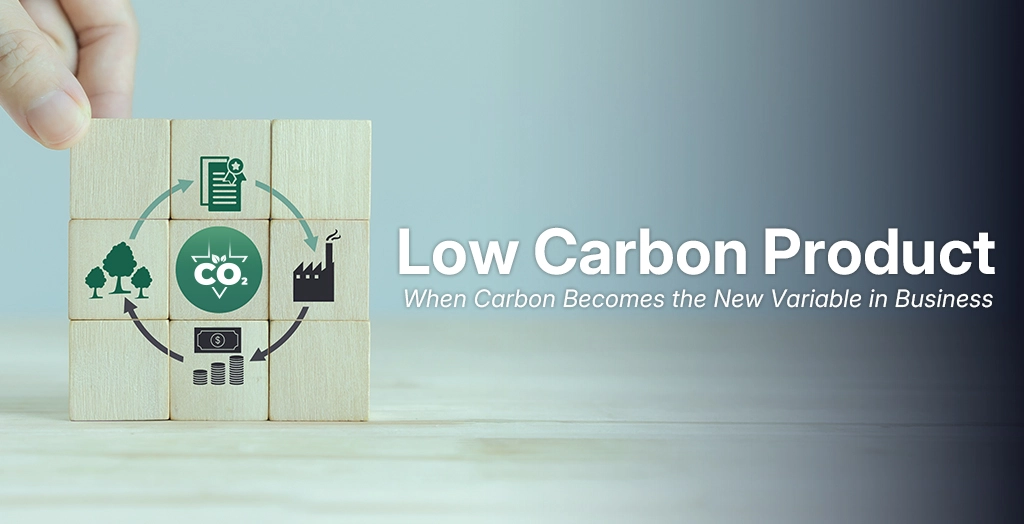
While those factors still matter, a new, powerful variable has quietly entered the chat: “Carbon Footprint.” In the near future, the amount of carbon emitted per item or pack will no longer be just technical jargon hidden in a corporate report. It will become a standard label on every package—and a key deciding factor for modern consumers.
Redefining the Concept: What Exactly is a Low Carbon Product?
There is a common misconception that a Low Carbon Product must be made entirely from natural (bio-based) or 100% recycled materials. In reality, it goes much deeper than that.
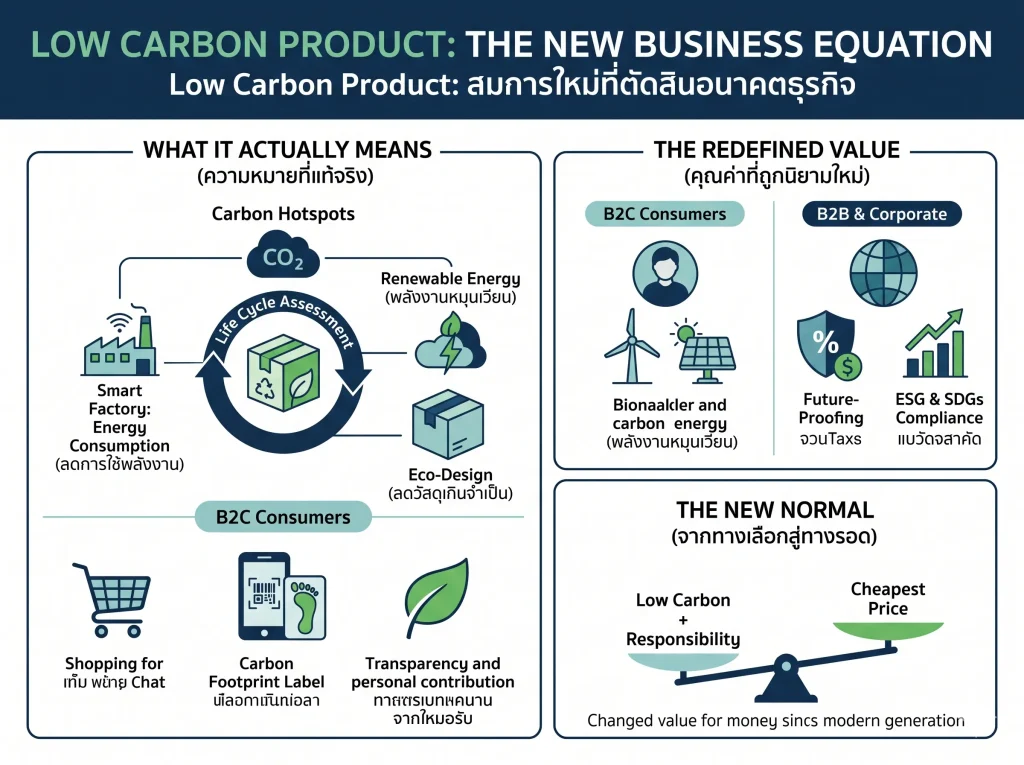
A Low Carbon Product is any goods designed and developed to minimize Greenhouse Gas (GHG) emissions throughout its entire Life Cycle—from raw material extraction, production, and transportation, to usage and end-of-life disposal.
Reducing carbon isn’t just about swapping materials. It’s about tackling the “Carbon Hotspots” in every stage of production:
- Manufacturing Process: Optimizing machinery to cut down energy consumption.
- Energy Sources: Shifting from fossil fuels to renewable energy.
- Eco-Design: Eliminating over-packaging and designing products that are easily recyclable.
Every Purchase is a Vote for the Planet’s Future
Today, products do more than just serve a function; they reflect the buyer’s values. Every time a consumer chooses a low-carbon alternative, they are implicitly voting against traditional, high-pollution manufacturing.
While cutting carbon from a single item might seem like a drop in the ocean, multiplying that action by millions or billions of items worldwide creates a massive, tangible wave of change.
Why Modern Consumers and B2B Buyers Willingly Pay More for “Value”
The driving force behind the green shift isn’t just about price—it’s about the added value. Today’s buyers see immense worth in eco-friendly choices:
For Every Day Consumers:
- Radical Transparency: Verifiable data backed by clear Carbon Footprint labeling.
- Active Participation: Giving individuals the power to combat climate change through their daily lifestyle choices.
For Corporate and B2B Buyers:
- Elevating Brand Image: Aligning operations with ESG (Environmental, Social, and Governance) and SDGs goals.
- Future-Proofing Business: Staying ahead of strict international regulations, especially in the EU and global markets, where carbon taxes are becoming reality.
From an “Alternative” to the “New Normal”
We are witnessing a major shift: Low Carbon Products are moving rapidly from a niche marketing trend to the industry standard.
As environmental data becomes fully transparent, products that fail to disclose their carbon footprint—or those with sky-high emissions—will simply lose their competitive edge.
For the modern generation, “value for money” has been redefined. It no longer means finding the cheapest price tag; it means finding a fair price that includes environmental responsibility. Companies that ignore this shift will soon find themselves left behind.
FAQ
Q1: Are Low Carbon Products always more expensive than regular products?
A: Not necessarily. While some green products may have a slightly higher price tag initially due to R&D or alternative material costs, the long-term reality is different. Eco-designing a product often involves reducing energy consumption and minimizing packaging waste, which actually lowers manufacturing and logistics costs over time, allowing for competitive market pricing.
Q2: How can we verify if a product is truly “Low Carbon” and not just a result of “Greenwashing”?
A: Look for verifiable, third-party eco-labels and certifications. Reliable products will display official stamps like the Carbon Trust, Carbon Footprint Registered marks, or local governmental certifications (such as TGO in Thailand). These labels guarantee that the product’s environmental claims are backed by rigorous life-cycle assessments, not just clever green marketing.
Q3: How does adopting Low Carbon Products future-proof a business against international regulations?
A: It is a game-changer for exporters. With global markets—especially the European Union—enforcing strict regulations like the CBAM (Carbon Border Adjustment Mechanism), high-emission products will face heavy financial penalties. Transitioning to low-carbon solutions now protects your business from future carbon taxes and keeps your supply chain compliant and competitive globally.