You want gloves, aprons or bags with your own size, thickness, colour or logo. A factory can make them for you. This is called OEM (original equipment manufacturing): the factory makes the product, and you sell or use it under your own specification or brand. This guide shows the six steps to get an accurate quote and a product that fits your work.
Step 1: Describe the task, not only the product
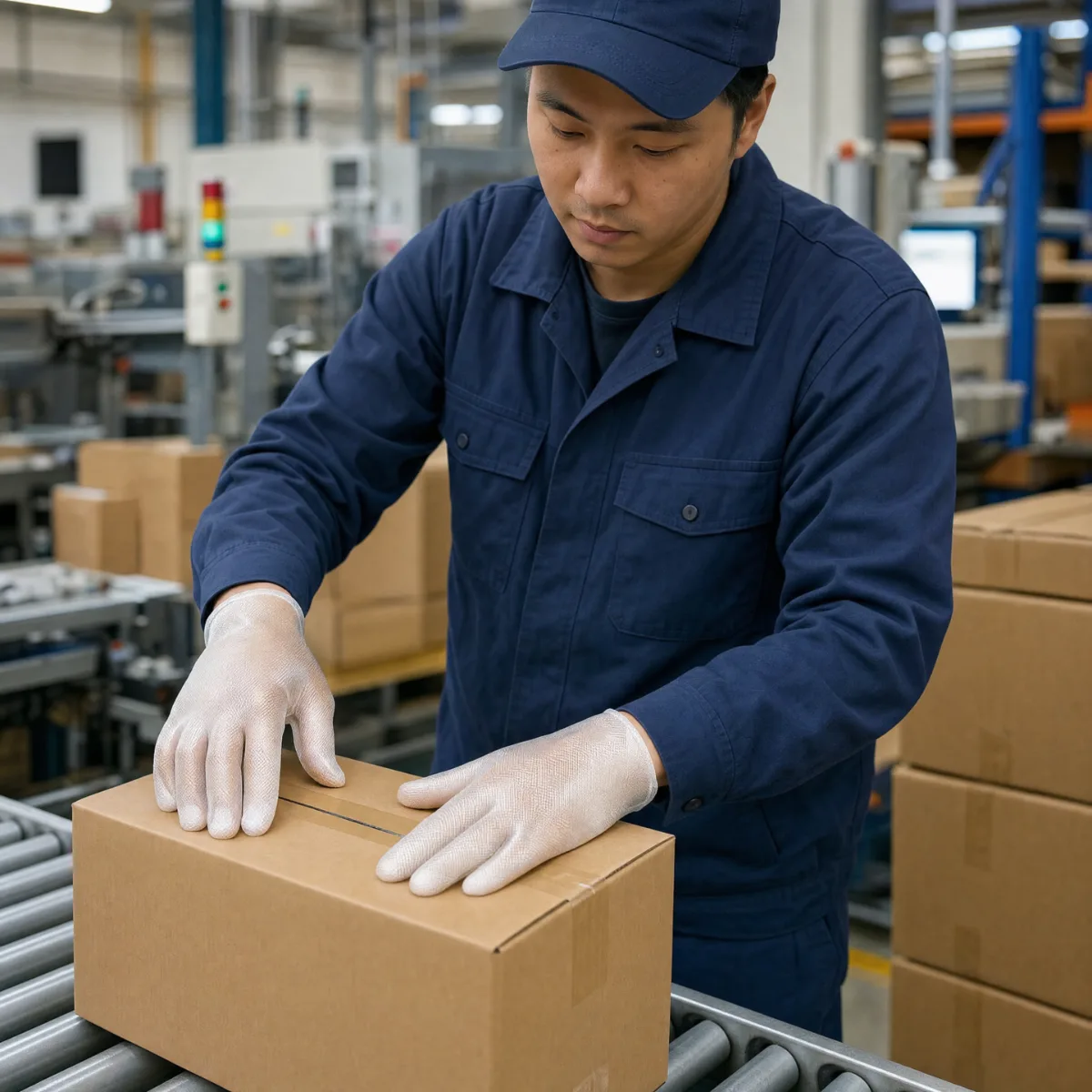
Start with how the product will be used. The same glove can be right for one task and wrong for another. Tell the factory:
- What the user does (for example, food prep, packing, cleaning).
- How long one piece is worn before it is changed.
- Whether the product touches food.
- Which country you will sell or use it in.
Plastic gloves suit light work, short contact, frequent changing and low-risk tasks. They are not a replacement for rubber or nitrile gloves in every application. For higher-risk work, choose gloves made for that risk.
Step 2: Choose the material and specification
These are the main options you can set. The example values below are from our HDPE gloves.
| Option | Typical choices |
|---|---|
| Material | HDPE, LDPE, CPE, PCR-PE (with recycled content), bio resin (PBAT+PLA) |
| Thickness | For example 7.1, 10 or 15 micron, or your own |
| Size | S, M, L, XL |
| Colour | Clear, blue or your own |
| Surface | Smooth or embossed |
| Printing on product | None, or 1 to 4 colours |
| Packing | 2 to 500 pieces per polybag or box, or your own |
| Printed box | Up to 8 colours |
A micron is one thousandth of a millimetre. A higher number means a thicker film.

Step 3: Ask for the right documents
Buyers in the EU and the US often need proof before they can approve a supplier. Ask for documents that match the exact model, specification and destination market. Bags and Gloves holds these factory certifications:
- ISO 9001 (quality management)
- ISO 14001 (environmental management)
- ISO 13485 (medical device quality management)
- BRCGS (food safety and packaging)
- Sedex (ethical trade)
For market rules, read our guides on Prop 65, REACH, SVHC and PFAS.
Step 4: Confirm quantity and minimum order
Minimum order quantity depends on the material, thickness, printing and packing you choose. Give your expected monthly or yearly volume. The sales team can then suggest the most efficient specification.
Step 5: Approve the specification and artwork
Before production, check every detail in writing: material, thickness, size, colour, printing, packing and carton marks. Ask the sales team about samples for your approval.
Step 6: Plan the lead time
Lead time is the time from order confirmation to goods ready. For example, our HDPE gloves list a lead time of 25 to 45 days. The exact time depends on your specification and quantity, so confirm it in your quote.
Checklist: what to send with your quote request
- Task and how often the product is changed
- Material and thickness (or ask us to recommend)
- Size, colour and surface
- Printing and artwork
- Packing and box printing
- Quantity per month or per order
- Destination country and documents needed
Frequently asked questions
Can you print our logo on gloves and boxes?
Yes. Gloves can be printed in 1 to 4 colours, and boxes in up to 8 colours.
Do you make aprons and bags as well as gloves?
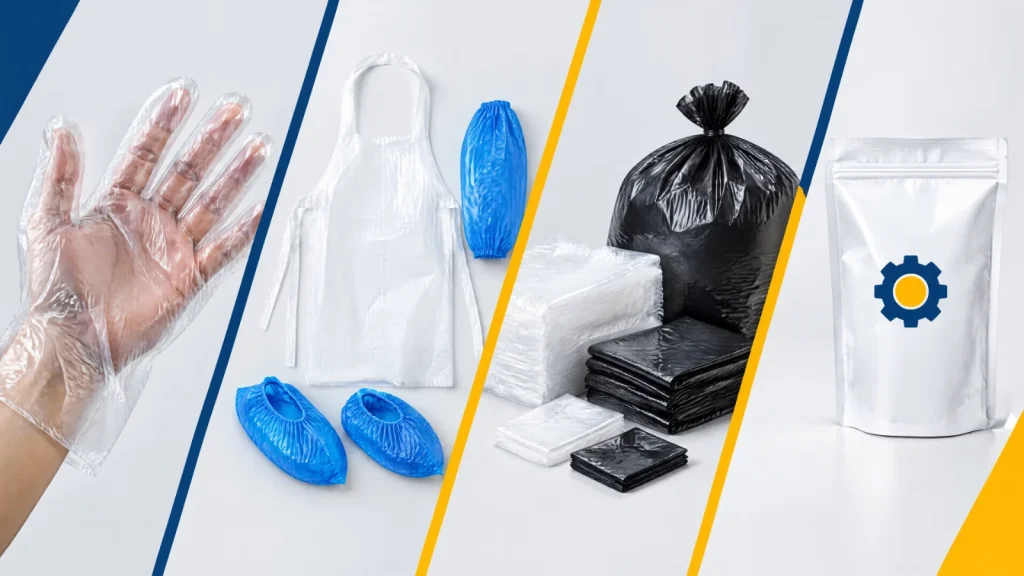
Yes. Bags and Gloves makes gloves, aprons, sleeve covers and plastic bags in our own factory in Thailand.
Can you provide food-contact documents?
Ask for documents that match the model, specification and destination market before you approve the product.